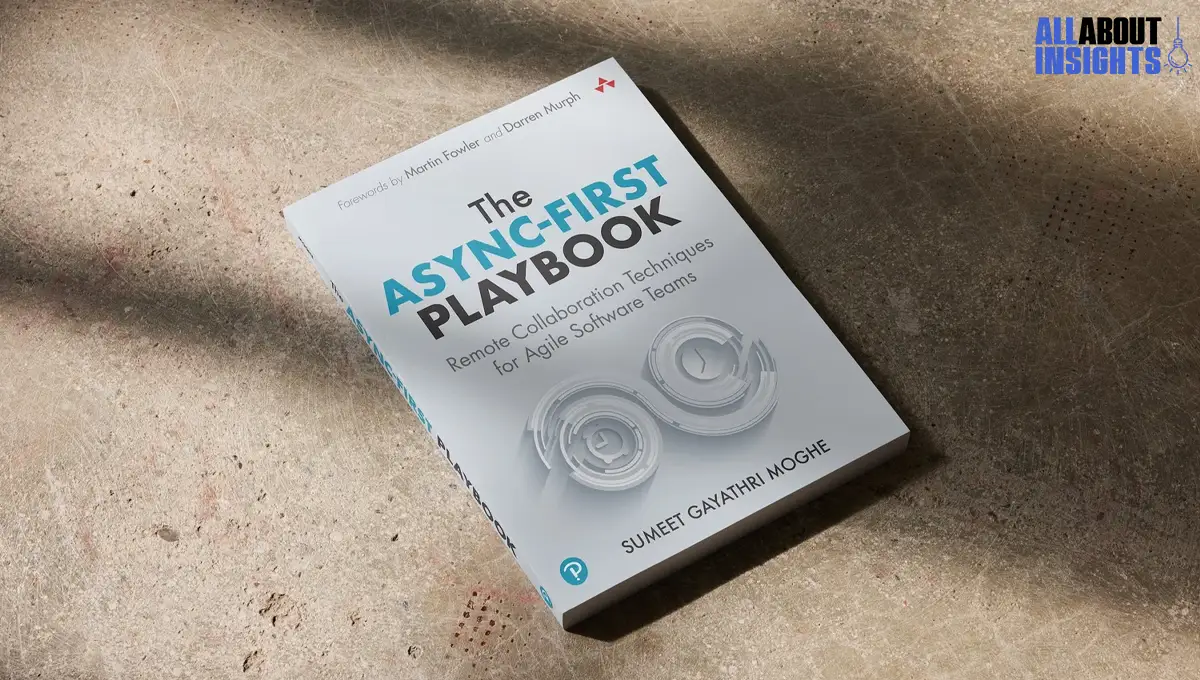
The Async-First Playbook: Cutting Meeting Hours Without Losing Alignment
Introduction
Your calendar may be the biggest bottleneck in your team, not your tools, hiring plan, or processes. When every update, decision, and question becomes a meeting, focused work gets squeezed into the gaps. Async-first work flips that default: information moves when people are ready, while live conversations are reserved for situations that genuinely benefit from real-time interaction. The goal is not to ban meetings. It is to build a communication system where meetings earn their place. This playbook shows tech leaders and operations managers how to reduce meetings, strengthen alignment, support distributed teams, create a culture without turning collaboration into chaos.
Quick Overview:
Async-first work is not about eliminating meetings. It is about making meetings the exception rather than the default. By moving status updates, documentation, reviews, and routine decisions into written or recorded formats, teams can protect focus time while maintaining visibility. This framework explains how tech leaders and operations managers can introduce asynchronous communication, redesign meetings, build stronger documentation habits, support distributed teams across time zones, and create an operating rhythm where people know what is happening without constantly being online.
What Is Async-First Work?
Async-first work means your team considers asynchronous communication the default starting point before scheduling synchronous collaboration.
Asynchronous work happens when people can contribute without being available at the same time. That includes written updates, project comments, recorded videos, documented decisions, email, and delayed chat responses.
Synchronous work meetings, calls, and live discussions still matters. The difference is that your team asks:
Does this actually need everyone in the same conversation at the same time?
If the answer is no, the work moves async.
This approach is particularly valuable for timezone-spanning teams, where finding a meeting time can force someone to work early, late, or outside their normal schedule.
Why Teams Should Reduce Meetings
Meetings have a legitimate purpose, but they are often used for information sharing rather than collaboration.
Atlassian's research on meetings found that 72% of meetings were ineffective, while 80% of respondents said fewer meetings would make them more productive.
The bigger issue is fragmentation.
A 30-minute meeting does not necessarily cost 30 minutes. If it interrupts two hours of focused engineering, writing, analysis, or strategic work, its opportunity cost is much higher.
An async-first operating model helps create a deep work culture by moving routine communication away from the calendar.
The Async-First Decision Framework
Before scheduling a meeting, run every request through five questions.
|
Question |
Default |
|
Is the information urgent? |
If no, async |
|
Is the goal information sharing? |
Async |
|
Does the work require debate or collaboration? |
Consider sync |
|
Can one person communicate the information clearly? |
Async |
|
Is the topic complex, sensitive, or blocked? |
Consider sync |
This closely follows Atlassian's “Think Before You Sync” framework, which recommends choosing async when the objective is information sharing and reserving synchronous time for work that genuinely benefits from live interaction.
The important word is considered.
Async-first does not mean sync-never.
What Should Move to Async?
Start with work that does not require immediate interaction.
1. Status Updates
Replace recurring status meetings with an async standup.
A simple daily or twice-weekly format could be:
- What I completed
- What I am working on
- What is blocked
- What I need from someone else
Post the update in your team's preferred workspace rather than asking everyone to attend a 30-minute call.
For distributed teams, this creates visibility without forcing everyone to report at the same time.
2. Project Updates
A project lead can publish:
Status: On track
Completed: API migration
Next: QA testing
Risk: Vendor approval pending
Decision needed: None
That is often more useful than a meeting where ten people listen to the same update.
3. Feedback
Instead of scheduling a meeting to review a document, design, or presentation, leave comments directly on the work.
Notion, for example, supports comments, mentions, notifications, and shared pages that allow teams to collaborate across time zones.
For more visual or nuanced feedback, asynchronous video can work better.
Loom is designed for async video communication, allowing teams to record explanations, walkthroughs, feedback, and updates without requiring everyone to be online simultaneously.
You can also explore our guide to the best async video tools when building an async communication stack.
Build a Written Communication Culture
Async work fails when teams move conversations out of meetings but do not document anything.
Documentation is the infrastructure of async work.
A strong written communication culture answers four questions:
- Where does information live?
- Who owns the decision?
- When is a response expected?
- How can someone find the context later?
GitLab has long emphasized documentation as a core part of asynchronous work, particularly for teams distributed across time zones.
The goal is not to document every trivial conversation. It is to make important context durable.
Use One Source of Truth
Avoid scattering decisions across:
- Slack DMs
- Email threads
- Meeting recordings
- Random documents
- Project management comments
If a decision affects the wider team, record the decision and rationale somewhere searchable.
That turns communication into organizational memory.
Async Decision Making Without Endless Delays
One concern about async work is that decisions will become slower.
Usually, the bigger problem is unclear ownership.
A simple decision document should contain:
Decision: What needs to be decided?
Context: Why does it matter?
Options: What are the alternatives?
Recommendation: What do you propose?
Owner: Who makes the final call?
Deadline: When will the decision be made?
Frameworks such as DACI can help clarify who drives a decision, who approves it, who contributes, and who simply needs to be informed.
Async decision making can also reduce the tendency for the loudest person in the room to dominate discussion by giving contributors time to consider information before responding.
Introduce Meeting-Free Days Carefully
A meeting-free day can create a strong signal that focused work matters.
But do not start by declaring that nobody can ever schedule a meeting on Wednesdays.
Instead, establish exceptions.
For example:
Wednesday = Focus Day
Allowed:
- Customer emergencies
- Critical incidents
- Hiring interviews
- High-priority decisions
Everything else moves async.
This makes the rule practical rather than ideological.
If a full meeting-free day is unrealistic, start with protected half-days or recurring blocks.
How to Redesign Your Existing Meetings
Run a meeting audit.
Create a list of every recurring meeting and classify each one:
|
Meeting Type |
Action |
|
Status update |
Replace with async |
|
Information presentation |
Record or document |
|
Project review |
Async first, sync if needed |
|
Brainstorming |
Keep or test hybrid |
|
Complex decision |
Keep, with async pre-work |
|
Team building |
Keep intentionally |
|
One-on-one |
Usually keep |
|
Meeting with no clear owner |
Cancel |
Atlassian recommends auditing recurring meetings to identify which can be replaced with asynchronous collaboration and which should be redesigned.
Do not measure success by the number of canceled meetings alone.
Measure whether the team can still make decisions, find information, and move work forward.
Use Async Pre-Work for Meetings You Keep
Some meetings should stay.
But even these can become more efficient.
Send the context before the meeting:
- Background
- Data
- Relevant documents
- Questions
- Proposed options
- Desired decision
Then use live time for discussion and decisions not reading slides aloud.
Atlassian's page-led meeting approach uses written context before a meeting so participants arrive prepared and the live conversation can focus on higher-value collaboration.
This is often the best compromise for teams that are not ready to become fully async.
Tools for an Async-First Team
Your tool stack should support the operating model rather than create another layer of complexity.
Slack — Communication Layer
Use channels for visible discussions, announcements, questions, and asynchronous updates.
Set expectations around response times so Slack does not quietly become a 24/7 synchronous workspace.
Notion — Knowledge Layer
Use a shared workspace for policies, project documentation, meeting notes, decisions, and team knowledge.
Loom — Visual Communication Layer
Use async video when written explanations would take too long or lack visual context.
Fireflies — Meeting Capture Layer
For meetings you still need, an AI meeting assistant can capture transcripts, summaries, and action items so the resulting knowledge does not disappear when the call ends.
Our guide to the best AI meeting assistants can help compare options.
You can also turn recorded conversations into reusable organizational knowledge with our guide on converting meeting transcripts into a knowledge base.
The 30-Day Async-First Rollout
Do not transform your entire company overnight.
Week 1: Audit
Track:
- Meeting hours per employee
- Recurring meetings
- Meeting attendance
- Meeting purpose
- Decisions made
Week 2: Replace
Choose three meeting types to move async.
Start with low-risk status updates and information-sharing meetings.
Week 3: Standardize
Create templates for:
- Async standups
- Decision documents
- Project updates
- Written announcements
- Async feedback
Week 4: Measure
Compare:
- Meeting hours
- Decision turnaround
- Employee focus time
- Response times
- Missed-context incidents
- Team sentiment
Then keep what works and change what does not.
Common Async-First Mistakes
Eliminating meetings too aggressively:
Some work benefits from real-time interaction. Conflict resolution, sensitive conversations, complex decisions, and relationship building often need synchronous communication.
Turning Slack into a constant inbox:
Async communication does not mean instant replies. Define response expectations.
Writing too much:
Async communication should be clear, not enormous. Lead with the decision, request, or takeaway.
Failing to document decisions:
If important decisions remain buried in chat, your organization will recreate the same conversations later.
Measuring activity instead of outcomes:
The objective is not fewer messages. It is better work with less unnecessary coordination.
Expert Tips for Tech Leaders and Ops Managers
Make the default explicit. Tell employees when they should choose async.
Set response-time norms. For example, routine requests may receive a response within one business day.
Protect focus time. Do not replace meetings with endless notifications.
Reward documentation. Treat clear written context as a productivity skill.
Keep intentional synchronous moments. Team connection should not disappear simply because routine coordination moves async.
Review the system quarterly. Communication norms should evolve with team size, business complexity, and time-zone distribution.
Conclusion
Async-first work is not a calendar hack; it is an operating model. The objective is to move routine updates, reviews, documentation, and decisions into channels where people can contribute without being online simultaneously, then protect meetings for work that benefits from live interaction. Start small: audit recurring meetings, establish written norms, introduce an async standup, and protect meeting-free blocks each week. Track meeting hours, decision turnaround, and team sentiment for a month. Then adjust. Ready to make the shift? Review your meeting stack, choose async tools, and use our AI meeting assistant guide to build a collaboration system that lasts.
FAQs
-
What does async-first work mean?
Async-first work means teams default to communication and collaboration that does not require everyone to participate simultaneously, using meetings when real-time interaction adds meaningful value. -
How does asynchronous communication reduce meetings?
It replaces information-sharing meetings with written updates, recorded videos, project comments, documentation, and other formats that people can consume on their own schedules. -
Can async work hurt team alignment?
It can if documentation, ownership, and communication norms are weak. A strong async system actually makes important context more visible because decisions and updates are recorded. -
Should every company have meeting-free days?
Not necessarily. Meeting-free days work best when they fit the team's responsibilities. Some organizations may benefit more from protected focus blocks or meeting-free half-days. -
Is async-first work suitable for distributed teams?
Yes. It is particularly useful for teams spanning multiple time zones because people can contribute without waiting for everyone to be online simultaneously.
Key Takeaways
- Async-first work is not meeting-free work.
- Use meetings for decisions, complex collaboration, conflict resolution, and relationship building.
- Move status updates, routine reviews, documentation, and information sharing async.
- Build a strong written communication culture before reducing meetings aggressively.
- Use async standups and decision documents to maintain visibility.
- Protect meeting-free days or focus blocks for deep work.
- Measure outcomes, not simply the number of meetings canceled.