Personal Superintelligence: What It Means for the Future of Work and Everyday AI
A year ago, "personal superintelligence" was mostly a phrase in a corporate memo.
In 2026, it's becoming a working description of where consumer and workplace AI is actually headed, an AI that doesn't just answer questions, but understands your goals, works across your apps, and takes action on your behalf.
That doesn't mean it exists yet in full. It means the pieces- personalization, memory, multimodal understanding, and AI agents that can act, are being assembled in public, quarter by quarter, by Meta and its competitors.
This article explains what personal superintelligence actually means, what's real today versus what's still aspirational, and why the concept matters for how you'll work over the next several years.
What Is Personal Superintelligence?
In simple terms, personal superintelligence describes the idea of a highly capable AI system built around one individual rather than a single general-purpose chatbot shared by everyone. Instead of answering isolated prompts, it would understand your specific goals, preferences, habits, and context well enough to act as a genuinely useful long-term collaborator. One that remembers your projects, adapts to how you work, and can carry out tasks on your behalf across the tools you already use.
The phrase was popularized by Meta CEO Mark Zuckerberg in a July 2025 memo titled "Personal Superintelligence," in which he argued that Meta believes strongly in building personal superintelligence that empowers everyone, contrasting this with approaches that centralize powerful AI and distribute its output more like a utility.
Zuckerberg did not outline specific products or applications in the letter, but framed superintelligence as a tool for personal empowerment rather than pure automation and efficiency.
Notably, Zuckerberg never precisely defined "superintelligence" in the memo, which is itself instructive. This is a vision statement and a research direction, not a settled technical specification.
Personal Superintelligence vs. Everyday AI Terms
Because so many AI terms get used loosely, it helps to separate them in practical terms rather than treat them as an official taxonomy.
|
Term |
What it generally means in practice |
|
Generative AI |
Produces text, images, audio, or video from a prompt; typically no persistent memory of you |
|
AI assistant |
A generative AI wrapped with some conversation history, app integrations, or voice access |
|
Personalized AI |
An assistant that adapts responses based on stored preferences, past interactions, or profile data |
|
AI agent |
A system that can take multi step actions, searching, clicking, filling forms, calling tools, with limited human input per step |
|
Multimodal AI |
A model that can process and reason across text, images, audio, video, and documents together |
|
AGI |
A hypothetical system with human level general reasoning across essentially all cognitive tasks |
|
Artificial superintelligence |
A hypothetical system that exceeds human intelligence broadly, not just in narrow tasks |
|
Personal superintelligence |
An emerging vision combining personalization, memory, multimodality, and agentic autonomy around one individual's goals |
One way to think about the progression: today's tools mostly answer. Agents increasingly do. Personal superintelligence, as envisioned, would combine persistent understanding of you with the ability to reliably act, while, crucially, remaining under meaningful human control.
Why Personalization Is the Core of the Idea
The difference between a generic AI assistant and something closer to personal superintelligence isn't raw intelligence. It's context.
Ask a conventional AI tool, "What should I prioritize today?" and it can only offer generic advice about time management, because it has no idea what's actually on your plate. A more personalized system, by contrast, could potentially factor in your calendar, outstanding deadlines, the status of active projects, and patterns from how you've made similar decisions before, producing an answer that's actually specific to your day.
That kind of context awareness depends on a few things working together:
- Memory. The ability to retain relevant facts about your work and preferences across sessions, not just within a single conversation.
- Integration. Access to the calendars, documents, and applications where your actual work lives.
- Consistency. Recognizing your communication style, recurring tasks, and priorities well enough to act as an extension of how you already work.
It's worth being clear eyed here. Current AI memory systems are genuinely useful but imperfect. They forget things, misinterpret context, and don't have anything resembling a complete picture of a person's life or judgment. Vendors are actively expanding memory features, and Meta AI's newer capabilities, described below, point toward more persistent, cross app context. But treating any current system as having comprehensive, reliable knowledge of a user would be a mistake, both practically and from a trust standpoint.
AI Agents and the Shift Toward Autonomy
Personalization answers the "does it know me" question. Agentic capability answers the "can it act for me" question, and it's the second half of what makes personal superintelligence distinct from a smarter chatbot.
There's a meaningful gradient between:
- Generating an answer. The system responds with information only.
- Recommending an action. It suggests what you might do next.
- Executing a single action. It sends an email or creates a calendar event when asked.
- Completing a multi-step workflow. It researches a topic, drafts a document, checks it against a source, and delivers a finished output with minimal supervision.
Meta's own recent releases illustrate this progression concretely. In July 2026, Meta announced that Meta AI, powered by Muse Spark 1.1, can now make plans, connect to email and calendar apps, create slides, and handle tasks on a user's behalf, from daily briefings to research deep dives. According to Meta, the underlying model is built to plan, work with a user's apps, and follow through on tasks from start to finish, which is what enables Meta AI to begin taking action rather than only responding to prompts.
In a professional context, realistic near term agentic use cases look like:
- Researching a competitor and compiling a summary of their pricing and positioning
- Preparing a first draft of a meeting brief from calendar invites and recent emails
- Comparing two contract drafts and flagging the differences
- Organizing scattered notes or files into a structured outline
- Drafting routine customer communications for a human to review and send
The catch is that autonomy introduces risk in direct proportion to its usefulness. An AI with permission to send messages, modify files, or make purchases can also misread instructions, act on outdated or incomplete information, or take an action a person would not have approved.
This is why human oversight, clear permissions, approval checkpoints for consequential actions, and visibility into what an agent actually did, isn't a limitation on agentic AI so much as a requirement for using it responsibly. Teams building out their broader technology stack should treat AI agents as another category of tool that needs governance, not a black box that operates on blind trust. Our guide to the remote worker tech stack covers how AI tools fit alongside the rest of a distributed team's toolkit.
Why Multimodal AI Matters for a "Personal" System
A text-only assistant can only work with what you type. A genuinely personal AI is more useful if it can also understand what you're looking at, listening to, or working on, which is why multimodal capability is treated as foundational to the personal superintelligence vision rather than a bonus feature.
Meta describes Muse Spark, introduced in April 2026 through Meta Superintelligence Labs, as a natively multimodal reasoning model with support for tool use, visual chain of thought, and multi-agent orchestration, calling it the first step on Meta's scaling ladder toward personal superintelligence.
The follow-up release, Muse Spark 1.1, launched in July 2026, is described by Meta as a multimodal reasoning model built for agentic tasks, with major gains in tool and computer use, coding, and multimodal understanding.
In practice, multimodal reasoning is what would let a personal AI look at a photo of a whiteboard and turn it into an action list, listen to a meeting and extract commitments, or review a spreadsheet and a slide deck together to check that the numbers match. None of this requires superhuman intelligence. It requires combining modalities the way a competent human assistant already does. Current systems can do meaningful versions of these tasks today, though reliability varies by task complexity, and errors are still common enough that outputs generally need human review before they're treated as final.
AI Glasses and Wearables: The Ambient Layer
If personal superintelligence depends on context, wearable devices are a natural next interface, because they can observe context continuously rather than only when a phone or laptop is open.
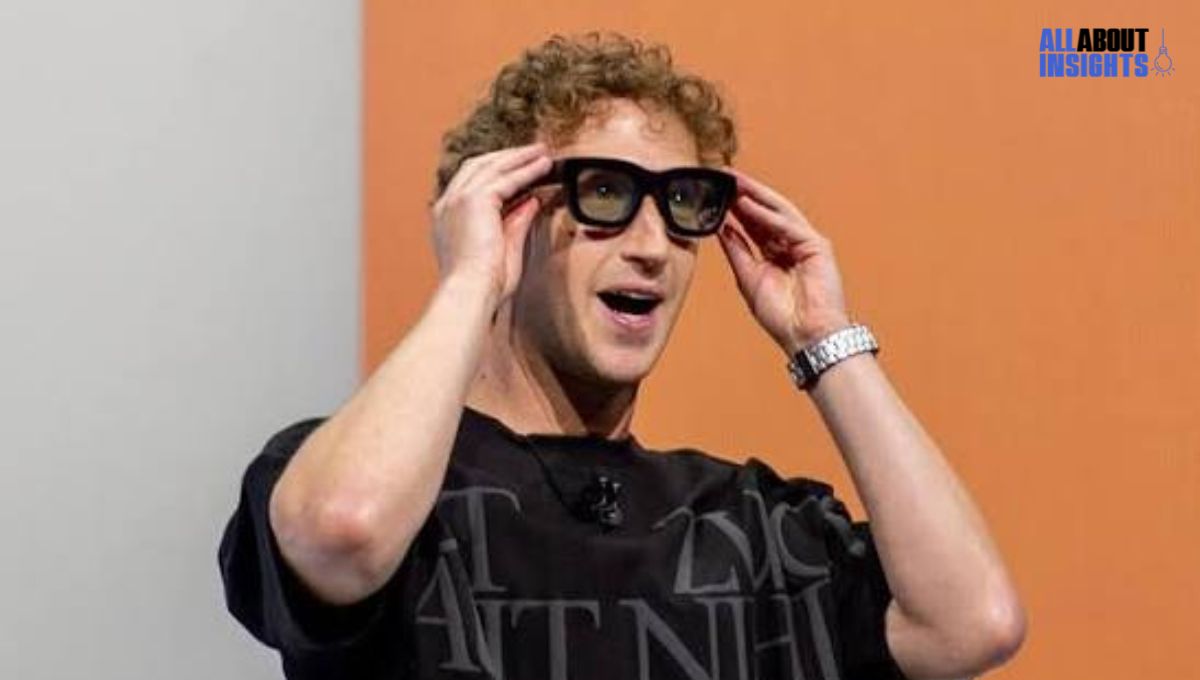
Meta has been explicit that this is central to its thinking. In his original 2025 memo, Zuckerberg predicted that smart glasses and other personal devices would become "our primary computing devices," reasoning that personal superintelligence that knows a user deeply and understands their goals will be most useful when paired with devices that can see what the user sees and hear what they hear throughout the day. Meta has since said Muse Spark would roll out to WhatsApp, Instagram, Facebook, Messenger, and AI glasses, extending the same model family that powers Meta AI's chat experience to a hands free, camera and microphone equipped format.
Realistic current and near term use cases for AI glasses include:
- Getting contextual information about something in view without pulling out a phone
- Basic translation or identification assistance
- Voice based reminders and quick task capture
- Hands free navigation prompts
- Capturing notes or photos of physical documents or whiteboards mid task
This is often discussed under the umbrella of "ambient computing," the idea that AI assistance becomes available continuously in the background rather than something you have to deliberately open an app to access. That's a reasonable direction of travel, but it's worth being precise about what's proven versus aspirational. Today's glasses handle discrete, well defined tasks reasonably well. The kind of continuous, deeply contextual understanding described in Meta's long term vision is still being built out. If you want to see what hands free AI looks like as a shipping product today rather than a roadmap slide, you can explore Meta AI glasses directly from Meta, which is the most reliable place to check current models, features, and availability.
For organizations, wearable AI also raises a practical question that predates AI: how does a mobile first, always listening device fit into existing device policy? That's worth thinking through alongside broader BYOD and mobile governance, which we cover in our piece on mobile IT policy for distributed teams.
What This Means for the Future of Work
For All About Insights readers, the more immediate question isn't whether superintelligence will exist. It's how the personalization and agentic capabilities being built right now will change day to day work over the next few years.
Knowledge workers, marketers, analysts, and writers
The most plausible near term shift is augmentation rather than replacement. A personal AI that can draft a first pass report, summarize a stack of documents, or prepare a competitor analysis doesn't eliminate the analyst or writer's job. It changes where their time goes, shifting effort toward judgment, editing, and decisions rather than first drafts and information gathering. That said, it would be misleading to suggest this has zero effect on demand for purely repetitive research or drafting work. Some of that work is likely to shrink as automation absorbs more of it. Specialized AI writing tools already play a role here, and it's worth distinguishing narrow tools built for a single job from the broader, more personalized systems this article is about. See our roundup of AI writing tools for business for that comparison.
Remote and hybrid teams
Distributed teams already juggle asynchronous communication, meeting overload, and information scattered across too many tools. A personal AI layer that can prepare meeting briefs, summarize threads, or surface the right document at the right time addresses a real pain point for hybrid work. Our guide to collaboration tools for hybrid teams goes deeper on how AI assisted workflows fit into that picture. The organizational risk is that this convenience creates pressure to grant AI tools broad access to company systems and data faster than governance can keep up, which is a reason for deliberate permissioning, not a reason to avoid the tools altogether.
Entrepreneurs and small businesses
For solo founders and small teams, the appeal of personal superintelligence is operational leverage. One person handling market research, competitor analysis, content drafting, and basic customer support with AI assistance that would previously have required additional hires. Concretely, that might look like using an AI agent to draft initial customer response templates, compile a competitor pricing comparison, or outline a business plan section, with a human still reviewing before anything goes out. For businesses building or expanding their online presence as part of this shift, our guide on how to create a website to sell products is a useful next step.
Managers and customer facing roles
Managers may find personal AI most useful for synthesis, pulling together status updates, flagging risks across projects, and preparing for one on ones, while customer service professionals could see AI increasingly draft or triage routine responses, with humans handling exceptions and judgment calls. Here too, "augmentation with some automation" is a more accurate description than either "replacement" or "no real change."
Privacy and Security: The Trade Off Behind Personalization
The more an AI system knows about you, the more useful it can be, and the more sensitive that access becomes. This is not a hypothetical tension. It's the central trade off of the entire personal superintelligence concept, and it deserves equal weight to the productivity story.
Relevant risk areas include:
- Persistent memory and data retention. Systems that remember your projects and preferences are, by definition, storing personal and often business sensitive information somewhere, for some period of time.
- Cloud versus on device processing. Where data is processed affects both latency and exposure. Not all providers handle this the same way, and policies change.
- Third party integrations and permissions. Connecting an AI assistant to email, calendars, and business systems means evaluating exactly what it can read and do, not just what it's convenient for it to access.
- Agentic actions. An AI that can send messages or modify files on your behalf needs guardrails proportional to the damage a mistake could cause.
- Workplace and business data. Employees should not assume it's appropriate to feed confidential company information into a personal AI account without checking company policy first.
AI glasses add a distinct layer of concern because they can capture people who never opted into the interaction. Cameras and microphones worn in public, at work, or in private settings raise questions about consent for bystanders, recording in confidential meetings, and appropriate use in sensitive locations, concerns that exist independently of how good the underlying AI is. Organizations extending device policy to cover wearables should treat this as seriously as any other endpoint security decision.
None of this means personal AI is inherently unsafe. Most mainstream providers, including Meta, publish information about data controls, permissions, and deletion options, and security practices continue to mature. It does mean that "useful" and "trustworthy with your data" are two separate questions that deserve separate scrutiny, especially as these tools request more access in exchange for more personalization.
Keeping Humans in Control
As AI systems gain more autonomy, the more important question becomes governance, not capability. Users and organizations benefit from being able to clearly answer:
- What information can this AI access, and for how long is it retained?
- What does it remember about me or my work, and can I review or delete that?
- What applications and accounts is it connected to?
- What actions can it take without asking first, and what requires my approval?
- How do I restrict or revoke access if something changes?
Increasing AI autonomy should not be treated as an automatic trade off against human oversight. The two can and should coexist, with approval checkpoints scaling to the stakes of the action. Sending a routine calendar invite is a low stakes action. Sending a contract or making a purchase is not, and systems designed responsibly should treat those differently.
The Honest Balance Sheet
Potential benefits of the direction personal superintelligence points toward include meaningful productivity gains, better personalization and accessibility for people who don't have a human assistant today, improved information management, less time spent on repetitive tasks, and genuinely useful support for people juggling remote or asynchronous work.
Potential concerns include privacy exposure from persistent memory and broad integrations, security risk from agentic actions taken with insufficient oversight, the possibility of over reliance on AI judgment, workplace surveillance risk if employer provided AI tools track more than employees realize, data concentration in a small number of large platforms, and the basic fact that current AI systems still make mistakes, sometimes confidently and invisibly.
Neither side cancels the other out. The realistic picture is a technology direction with genuine upside that also concentrates new categories of risk, and reasonable people, and reasonable companies, will land in different places on how much of that trade off they're willing to accept.
Frequently Asked Questions
What is personal superintelligence?
Personal superintelligence is Meta's term, popularized in a 2025 executive memo, for an AI vision centered on deep personalization, persistent memory, multimodal understanding, and agentic autonomy built around an individual user's goals, rather than a single generic assistant shared by everyone. It's a product and research direction, not a finished technology or a standardized technical term.
Is personal superintelligence the same as AGI?
No. AGI generally refers to a hypothetical system with human level general reasoning across essentially all cognitive domains. Personal superintelligence, as currently used, describes a more personalized and agentic product experience built on existing AI models. It does not imply that AGI has been achieved.
How is personal superintelligence different from a tool like ChatGPT?
Most mainstream AI assistants today respond to prompts, with varying and often limited memory across sessions. The personal superintelligence vision emphasizes persistent context about a specific user, deeper integration with that person's apps and workflows, and the ability to take multi step action rather than only generate a response.
How could personal AI use memory in practice?
Rather than starting fresh with every conversation, a system with meaningful memory could recall a user's ongoing projects, communication preferences, and prior decisions to give more relevant answers over time. Current memory features vary widely by provider and are not comprehensive or perfectly reliable.
What role will AI agents play?
AI agents are expected to handle increasing amounts of multi step work, research, drafting, scheduling, and data comparison, with a person setting objectives and reviewing outcomes rather than doing every step manually. The more autonomy an agent has, the more oversight and clear permissions matter.
Could AI glasses become part of personal superintelligence?
Meta has explicitly positioned AI glasses as a likely interface for this vision, since wearable devices can provide continuous visual and audio context that phones don't. Current AI glasses already support features like hands free voice assistance and contextual information. Deeper "ambient" capability is still developing.
What are the privacy risks?
The main risks involve how much personal and business data a system retains, who can access it, what third party integrations it's connected to, and what actions it's permitted to take autonomously. Wearables add bystander consent and recording concerns that go beyond standard software privacy questions.
Will personal superintelligence replace jobs?
Most evidence points toward augmentation, AI handling more first draft and repetitive work while people focus on judgment, review, and decisions, rather than wholesale replacement, though some reduction in demand for narrowly repetitive tasks is a realistic possibility, not a certainty.
Does personal superintelligence exist today?
Not as a finished, fully realized system. Components of the vision, personalization, multimodal reasoning, agentic task completion, and wearable interfaces, exist today in early and improving forms from Meta and other providers. The complete vision Meta has described remains a stated direction rather than a delivered product.
The Real Question Isn't Just How Smart AI Gets
Personal superintelligence is best understood today as a direction the industry is moving in, not a product you can fully buy or a milestone that's already been reached. Meta's Muse Spark releases through 2026 show real, incremental progress toward personalization, multimodal reasoning, and agentic action, but "progress toward a vision" and "vision achieved" are different things, and it's worth staying precise about which one you're reading about.
The more useful question for anyone evaluating these tools isn't only "how intelligent can AI become?" It's "how much context, personal information, autonomy, and decision making authority am I willing to give an AI system designed to work specifically for me, and what do I get in return?" That's a question with a different answer for every person, team, and organization, and it's one worth asking deliberately rather than letting default settings answer for you.